

Lighthouses, Fisheries, and Forts
- Nikki Layton
- Oct 31, 2024
- 4 min read

September 9, 2023 and September 13, 2023
After our tour of Louisbourg and Sydney, it was time to head South to visit with Bob’s uncle in Chester, NS. Chester is a fantastic village and the founders were British who had been gifted land when there was a population boom in New England. It had a lot of activity during the American Revolution and the founders didn’t turn out to be that loyal to Britain and ultimately were charged with sedition. The drive from the Baddeck area to Chester was around 6 hours. Like most travel days, by the time you get to your destination and check in your day just gets away from you. We stopped for a short hike at Myles Doyle Falls just outside of Melford.


Around 6:00 pm we decided to have a quick walk around Chester and grab a quick bite. We found a great local brewery called Tanner and Co. Great beers and the Pizza place next store provides good food, It’s definitely worth a stop.
We took some time to travel around the Chester area and do a walk around Graves Island Provincial Park.





The next day we sailed Chester Harbour with Bob’s uncle on his boat. The day sail was nice and our first time out on the water in months. It was good to be out sailing again. After a great day sailing, we headed back to the Airbnb and took Zorro out for a quick walk. We had dinner with Bob’s uncle and aunt.

Our first stop outside of Chester was Lunenburg, a picturesque fishing town and a UNESCO world heritage site. This of course makes it a must stop for visitors in the area. The streets are lined with beautiful restored homes from the 1700s and 1800s. The waterfront that was once Canada’s second-largest fishery is now home to restaurants and shops and the Fisheries Museum of the Atlantic. The iconic red buildings that once housed the fish processing plant, buildings now hold stories and artifacts of a fishing heritage.


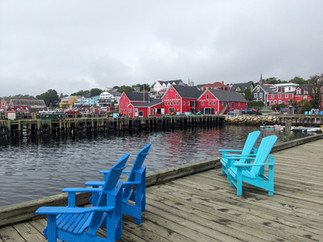


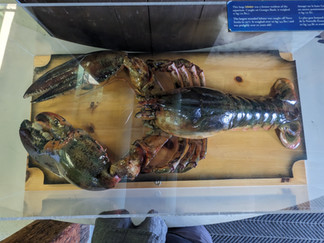


Further along the wharf is the boatyard that built the iconic Bluenose. The Bluenose is the most famous ship in Canadian history, the Bluenose was both a fishing and racing vessel in the 1920s and 1930s. The Nova Scotia schooner achieved immortality when its image was engraved onto the Canadian dime.

After lunch at the Smoke Pit BBQ, a great spot, we headed out to hike around the Blue Rocks. Which are just as the title would suggest, blue rocks. This cool fog rolled in and made the whole area look like a scene in a movie. When the fog lifted it revealed a nice inlet and bay with old fishing boats, a pier that had seen better days, and a series of buildings out over the water. There were groups of paddle boarders and kayakers and it would be a great place to explore by either mode if we had more time. Also for those of you that know Barry's love of real estate he managed to find a great property....it just needs a little fixing up.





A short drive to the North of Chester took us to Peggy’s Cove. A must-stop on the Nova Scotia visit. The village of Peggy’s Cove dates back to 1811 and is built around the lighthouse which sits out on these beautiful rocks that stretch out into St Margaret's Bay.


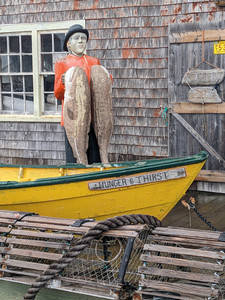
We spent a good part of the day wandering around the little village and even managed to hear a lunchtime concert in a redone one-room schoolhouse. The views are spectacular and the vibe is so quaint but I can’t imagine living there as even in mid-September there were thousands of people wandering around.
Across St Margaret's Bay from Peggy's Cove is the Bayswater SwissAir 111 Memorial to remember the Sept 2nd, 1998 crash that happened in the bay. This is the second deadliest aviation disaster in Canada all 219 people on board died.

The end of our journey with Bob and Sharon. They head home today. Hard to believe that our two weeks are done. The airport is just outside of Halifax and is only an hour away but we headed in relatively early so they had time to check in and get ready to head back to Vancouver. This also gave Nikki and me time to explore Halifax before we drove to Lockeport to visit my brother.
We checked out the Citadel in the center of downtown Halifax and even managed to see the Noon Gun go off! Built in 1749 to defend the harbour of Halifax, the present Citadel, was completed in 1856, officially called Fort George, named after Britain’s King George II, it is the fourth in a series of forts to sit atop Citadel Hill. Its distinctive star shape is typical of many 19th-century forts built by the British military and gave the garrison sweeping arcs of fire. From its deep defensive ditch, soldiers pointed muskets from every angle of its stout walls and large cannons lined its ramparts. It’s easy to see why no enemy force ever dared to attack the Halifax Citadel. The staff also do reenactments like they did in Louisbourg, so it is kind of like a play happening around you as you tour the fort.


We were originally going to spend the night in Halifax but a hurricane was approaching the area and we thought it best to head to my brother’s place and shelter in for a couple of days. We already had plans to travel with him and Andrea so we were just arriving a few days early.
More on the storm and the start of our travels with Brad and Andrea around Nova Scotia and Prince Edward Island.
Thanks for following along.


Comments